
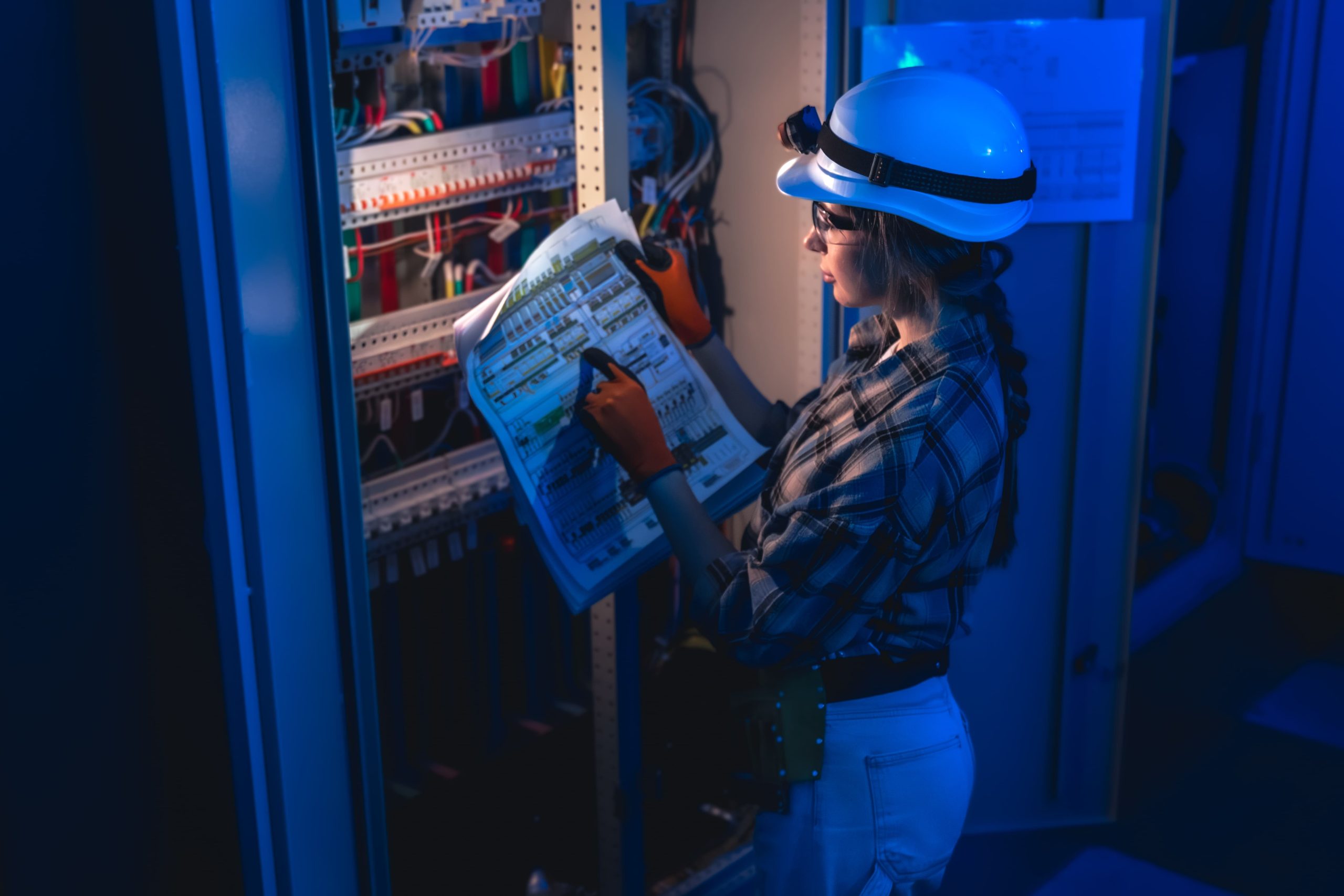
Modern cable tray manufacturing combines robotics, advanced technology, material and digital integration. Top producers coat fire-retardant coating and smart sensor systems for enhancement regarding safety and durability. These innovations extend the lifespan of infrastructure and minimize costly downtime. The technologies used by cable manufacturers are no longer judged on the basis of speed and production capacity. Over the past few years, cable tray manufacturing technology has touched space with the help of automation, predictive design and digital engineering. Some of the industries, like renewable energy plants and data centres, are no longer buying the products. That’s the reason the trend is now linked to the economics of the lifecycle, where the choice of every process is ultimately reflected in maintenance.
Advanced Production Methods Are Transforming The Cable Tray Manufacturing Industry.
The base of modern manufacturing depends on advanced production methods of cable trays that combine multiple stages in a continuous digital workflow. Bending, coating and cutting are no longer isolated steps. They are part of a proper system motivated by precision control. This mattress is a lot because fragmentation is used for the creation of hidden costs. Each variation led to a correction in the field. Those corrections become part of the liabilities for long-term use over time. Today, the production lines with integrated systems minimize that chain of errors at the source.
How Does Automation Take Place In Cable Tray Manufacturing?
The automation has a great impact on the manufacturing of cable trays in terms of speed, but the main transformation is cost stability over time. Servo-controlled machinery and CNC-driven systems help to ensure that every tray is identical in design. That consistency helps to reduce the operational surprises in the long term. Reducing the errors in fabrication helps to reduce the installation rework costs. Continuous production can minimize downtime-related cost fluctuations. With the drop in errors during installation, the demands for maintenance also drop. In infrastructure systems, small deviations can become stress points for the long term. Automation removes the variability at the origin, which gets translated into lower maintenance interventions.
Enhancement In Accuracy With Laser Cutting Technology For Cable Tray Profiles
Laser cutting technology has a great impact on lifecycle expenditure. Laser systems help to reduce the requirements for finishing and eliminate deformation. This also helps to reduce downstream labor costs before installation starts. As compared to mechanical cutting, laser cutting is burr-free, smooth, highly flexible in designing, more precise regarding installation fit and has low wastage of material. The changes in design can be implemented instantly without replacing the tools, just as we have to make little changes in software. This is a major change in how the customized treats are produced at scale.
Robotic Welding Technique For Consistent Quality
Robotic welding plays a vital role in cable tray manufacturing in reducing failures. Inconsistencies in welding rarely fail immediately. They fail under stress, slowly, corrosion exposure and vibration. That is where the higher maintenance costs originate. Uniform strength in welding minimizes the structural fatigue over time. Stable geometry of welding reduces the risks of deformation. Manual welding still regains significance in custom fabrication, but for repetitive production, industry robotics helps to reduce what becomes unpredictable liabilities for maintenance spread across the years.
Innovative Design For Cable Trays And Techniques For Fabrication
Modern and innovative designs for trays are increasingly shaped by the efficiency of the lifecycle rather than installation novelty. Digital simulation plays a vital role in refining the techniques for the fabrication of cable trays before production begins—airflow, load, thermal expansion, and all the distributions are tested virtually. Improvements in design that directly affect the costs of maintenance are snap-fit systems that reduce the installation errors, rounded edges that prevent the insulation damage of trays and replacement in furniture and anti-slip surfaces help to reduce maintenance slip accidents. Better designs not only reduce the installation time but also help to reduce how often the technicians need to return to the same system.
Conclusion
With the use of modern and latest technology, you will get the precise results with the help of Hi-TECH ENGINEERS in terms of steel fabrication, witnessed by our dedicated clients. Our professionals meet the standards of the industry in an efficient way while providing additional services, including steel fabrications and the manufacturing of cable trays.
FAQ’S
Which modern technologies are used nowadays for manufacturing cable trays?
The modern technologies like laser cutting, welding and CNC automation are used for manufacturing cable trays.
What advanced materials are used for the advancement of cable trays?
Materials like aluminium alloys, high tensile steel and hybrid composites are used for the advancement of cable trays.