
Earthing Strips
Earthing Strips- Metal Grounding Strips
Earthing strips are the conductive metal strips that provide a resistant path for the current or fault currents to dissipate into the soil. It also helps in providing safety mechanisms that help in preventing electric shocks and equipment damage by safely transferring the current into the earth. The strips are usually copper or galvanised strips, as they provide corrosion resistance. At Hi-Tech Engineers, we provide the earthing strips that are used in commercial, residential, and industrial areas. For the best earthing strips, you can choose us as we are the leading earthing strip manufacturer in Punjab.
We manufacture and galvanize MS earthing strips used widely in grounding systems for residential, commercial, and industrial use.
- Size Range: as per client requirement
- Material: Mild Steel
Uniform zinc coating ensures longer life, even in corrosive soils
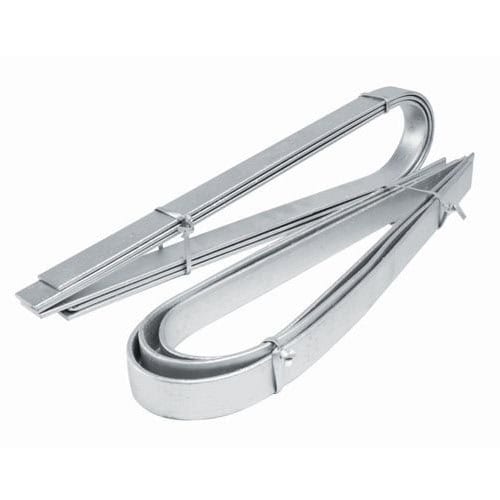
Features Of Earthing Strips
Material and Construction
The earthing strips are most commonly made of galvanised iron or copper strips. Galvanised iron is zinc-plated to enhance copper resistance, as it helps in preventing corrosion and rust. The earthing strips are available in different thicknesses, widths, and lengths.
Physical and Electrical Properties
The earthing strips offer a low-resistance pathway, which helps for quick and efficient dissipation of current and fault current. The strips are durable in soil, so they provide a longer lifespan. The earthing strips can fit into installation specifications as the strips are flexible and can be bent, cut, and welded to fit according to the requirements.
Safety
The strips also help in protecting appliances and industrial machines from damage caused by sudden voltage surges and short circuits. The strips also help in stabilising the voltage. The earthing strip is useful in preventing electrocution and electric shocks.
By engaging with the best earthing strips manufacturer in Mandi Gobindgarh, you can choose the best earthing strips according to your requirements.
FAQ's
Why are earthing strips used instead of wires?
The earth strips are used instead of earth wires because the strips offer high mechanical strength, lower resistance, and a greater surface area, as the strips help to disperse high fault currents more efficiently. The strips are used in both residential and commercial complexes.
What is the difference between GI and copper strips?
The difference between GI strips and copper strips is that GI strips are more cost-effective, stronger, and ideal for the standard and are best suited for a non-corrosive environment, while copper strips are suitable because they provide superior conductivity, high corrosive resistance and are best suited for acidic or corrosive soil
How to choose the right earthing strips?
The right earthing strips are very important. The size depends on the system fault levels, soil resistivity, and the required life span. A common rule for GI is to ensure cross-sectional areas. A common rule for GI is to ensure the cross-sectional areas that can handle expected fault currents, and it is hot-dip galvanised to increase the corrosion resistance.
How to maintain the earthing strips?
The earthing strips are easy to maintain. The strips can be maintained by periodic inspection for corrosion, especially for GI, and tightening of the loose connections is required to ensure long-term performance. The resistance of earthing strips can be reduced by using backfill compounds such as earth-enhancing materials and also by keeping the soil moist using salt and charcoal.
What is maintenance-free earthing?
The maintenance-free earthing system uses backfill compounds and corrosion-resistant materials that do not require regular watering and can last up to 20 years. The GI can last approximately 25 years, and copper strips can last approximately 40 years. It is also important to use products according to the quality standards.
What are the common applications of the earthing strips?
The common applications of earthing strips are that the strips are used in residential buildings, commercial complexes, electrical substations, and in industrial plants for equipment and earthing systems.